
URL
The web address or route string that points to a destination on the internet or inside a routing system.
Steht für
Uniform resource locator
Formale Definition
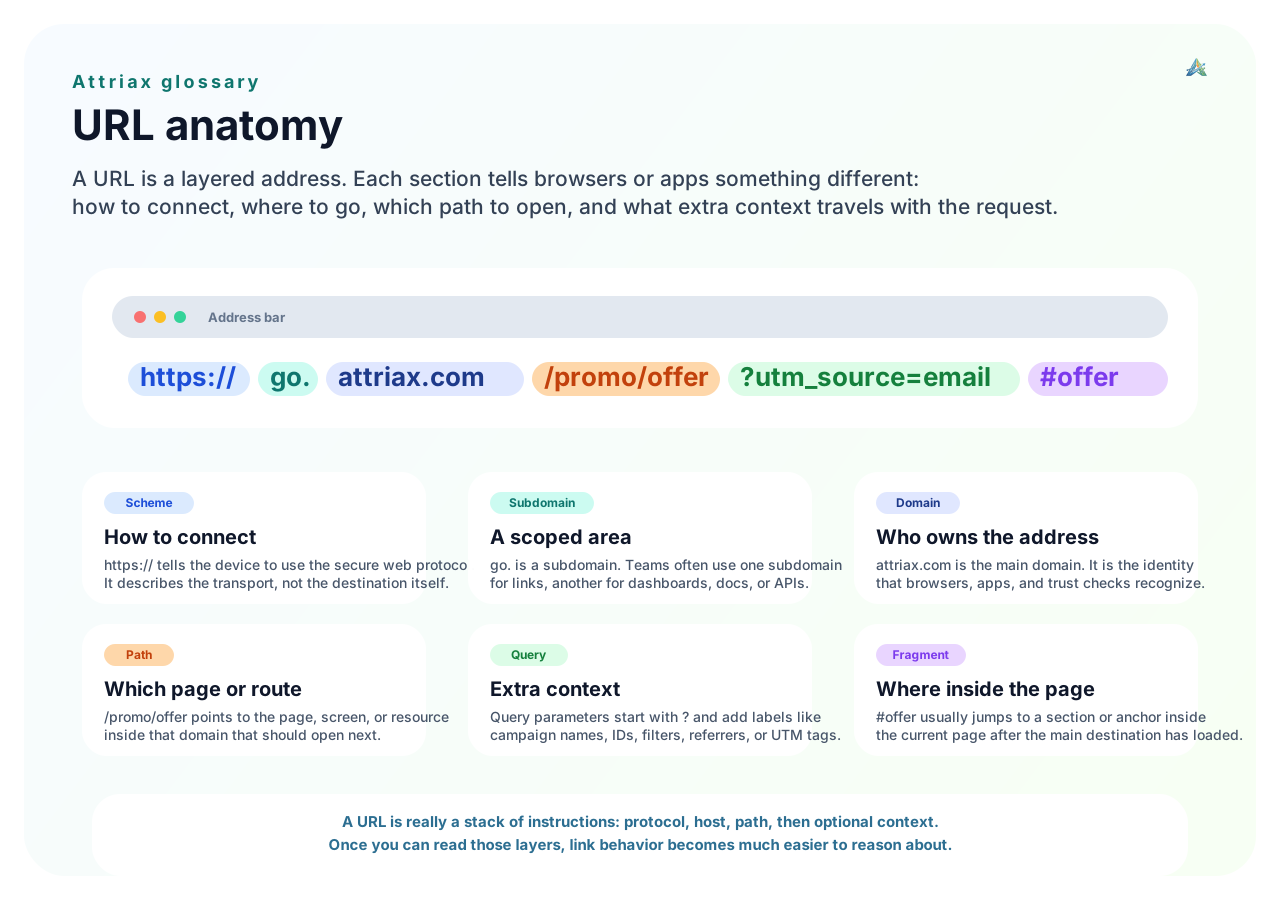
URL stands for uniform resource locator: a structured address that identifies the location of a resource or route, typically including protocol, host, path, and optional query parameters.
Einfach erklärt
It is the address you copy, share, or open. On the web it points to a page or resource. In mobile routing, the URL often carries the path or context that decides what should open next.
Visuelle Journey
Structure: a URL is a layered address. The scheme tells the browser how to connect, the host identifies where to go, the path points to the destination, and the query or fragment can add routing context.
Beispiele
- https://go.example.com/promo is a URL.
- A Smart Page can live at a public URL such as `/summer-launch`.
So funktioniert es
- The URL identifies the host and the path to resolve.
- Optional query parameters can add campaign context or routing data.
- Browsers, apps, and redirects use the URL to decide the next destination.
So nutzt Attriax den Begriff
- Attriax links are still URLs, even when they later route to apps, stores, or Smart Pages.
- URL structure matters because branding, path design, and query parameters all shape the measurement story.
- Trusted App Links and Universal Links keep the familiar web-style URL while opening native destinations.