
Conversion
A measurable outcome that represents success after a click, open, or campaign touchpoint.
Formal definition
A conversion is a user action designated as a success event within a measurement framework and used as an output for attribution, optimization, or reporting.
Plain-English explanation
A conversion is the action you wanted the user to complete, such as an install, signup, subscription, purchase, or completed onboarding. Teams also compare campaigns by conversion rate, which is usually measured as a percentage.
Visual journey
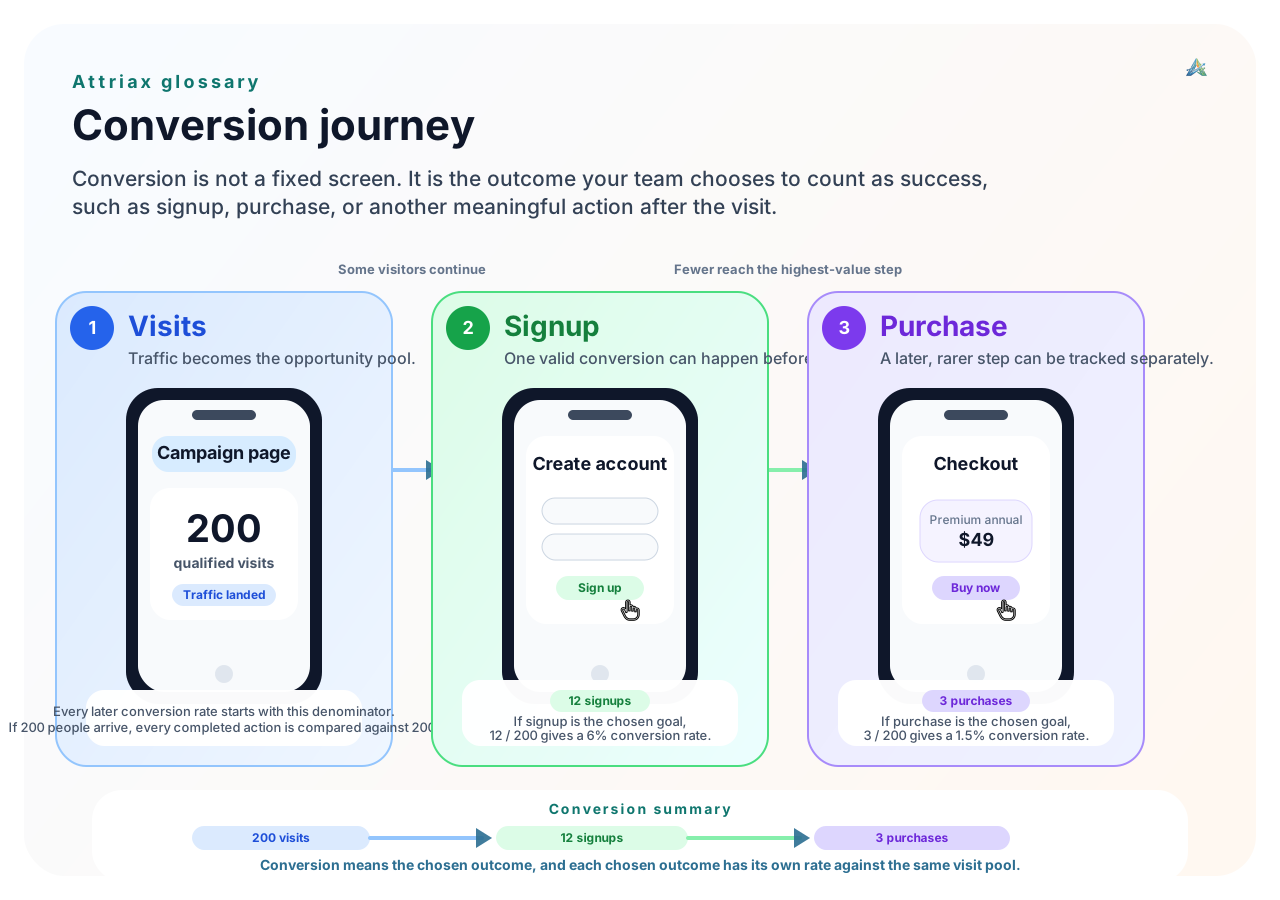
Journey: a campaign creates visits, the user reaches a Smart Page, then completes signup and later purchase. Both outcomes can count as conversions, and teams compare them against the incoming visit volume.
Examples
- Installing the app after tapping a campaign link.
- Completing signup after arriving through a Smart Page.
- If 200 clicks produce 12 signups, the signup conversion rate is 6%.
- Making a purchase after opening a deferred deep link.
How it works
- A business event is selected as meaningful enough to measure.
- The event is recorded with a timestamp and user context.
- Teams often compare that event against clicks, visits, or opens to calculate conversion rate: conversions / eligible opportunities * 100%.
How Attriax uses it
- Attriax treats conversions as the outcomes teams want to compare across campaigns, links, and channels.
- App installs, deep-link opens, and custom events can all help describe the route from acquisition to outcome.
- A campaign with a higher conversion rate is usually a stronger fit, but teams should still compare volume, quality, and downstream value.
Questions people ask
Why is conversion rate usually shown as a percent?
Because it compares successes to opportunities. If you divide conversions by clicks, visits, installs, or another base, then multiply by 100, you get a percentage that is easy to compare across campaigns.
Does a higher conversion rate always mean a campaign is better?
Usually it signals a better match between the audience and the offer, but not always by itself. Teams should also look at traffic volume, conversion quality, revenue, and what users do after the first conversion.